
Human stem cells can develop molecular and chromosomal abnormalities, arising at a very low level of mosaicism. These defects, primarily Structural variants (SVs) and Copy Number Variations (CNVs) as well as Single Nucleotide Variants (SNVs), need to be identified as quickly as possible in the process, as they can rapidly develop and overtake cell cultures. Their impact can be detrimental to the quality of the final product.
With the advent of cutting-edge technologies such as next-generation sequencing (NGS), the ability to detect novel abnormalities has greatly improved. Unlike traditional methods such as G-banded karyotyping, which are less sensitive and have limited resolution, NGS can detect variants with unprecedented precision. This new technology is making a significant contribution to our understanding of genomic variation and its potential impact in various clinical and research settings.
However, generating data is no longer the bottleneck. The main challenge with NGS is the vast amount of information it can generate. This places meaningful result interpretation out of reach for scientists who do not have bioinformatics capabilities within their organization.
This is what led Stem Genomics to design a range of NGS-based sequencing assays with fully interpreted results by iPSC experts that translate your genomic data into actionable insights.
A custom-made, targeted NGS panel composed of 361 genes that have been selected for their relevance to stem cell scientists. It detects Single-Nucleotide Variants (SNVs) associated with cancer (including TP53, BCOR, etc.) but also selected variants specific to pluripotent stem cells and their impact on the natural development of cells in culture.

The Stem-Seq™ Plus includes the Stem-Seq™ Panel for SNV detection as well as the additional capability to detect copy number variations (CNVs) across key regions of the genome. This powerful assay will allow the detection of CNVs in regions that may not have been considered previously or that could harbor unexpected variations. This comprehensive and unbiased view adds significant information on the genomic stability of your cells.

The Stem-Seq™ WGS: Explore the entire genomic architecture of your stem cells and identify potential pathogenic variants. The Stem-Seq™ WGS test detects CNVs, SNVs and SVs at various depth reads according to the FDA guidance in just 4 weeks !*

Watch short videos for a visual presentation of our latest NGS-targeted assays and discover the main benefits they offer scientists working on stem cells.
Stem-Seq™ Panel
Stem-Seq™ Plus
Stem-Seq™ WGS
When sequencing is complete, our field expertise will help you translate data into biological relevant insights that are relevant for your research work.
No need to have a team of in-house bioinformaticians or dedicate time for deciphering and interpreting results. Our iPSC specialists are committed to providing a comprehensive interpretation of single nucleotide variants (SNVs) by meticulously examining each variant in multiple databases such as Cosmic and ClinVar Clinical, as well as conducting an extensive literature review. In addition, for the copy number variation (CNV) analysis, our expert team will prioritize your variant by comparing it against Stem Genomics’ proprietary database (the Smart DB)* and the ACMG (American College of Medical Genetics and Genomics) classification standards. Your data will be thoroughly scrutinized to ensure the most accurate and clinically relevant findings for your specific application.
*SMART database: In order to accurately target the abnormalities relevant for hPSC researchers, Stem Genomics specifically analysed the data from 132 scientific publications concerning 1485 hPSC samples. After exclusion of polymorphic variants, we highlighted the presence of 949 recurrent genetic abnormalities (i.e., genomic defects found in at least five different publications). We then used these data to develop the iCS-digital™ PSC test. The test is published in Stem Cell Reports (Assou et al., 2020).
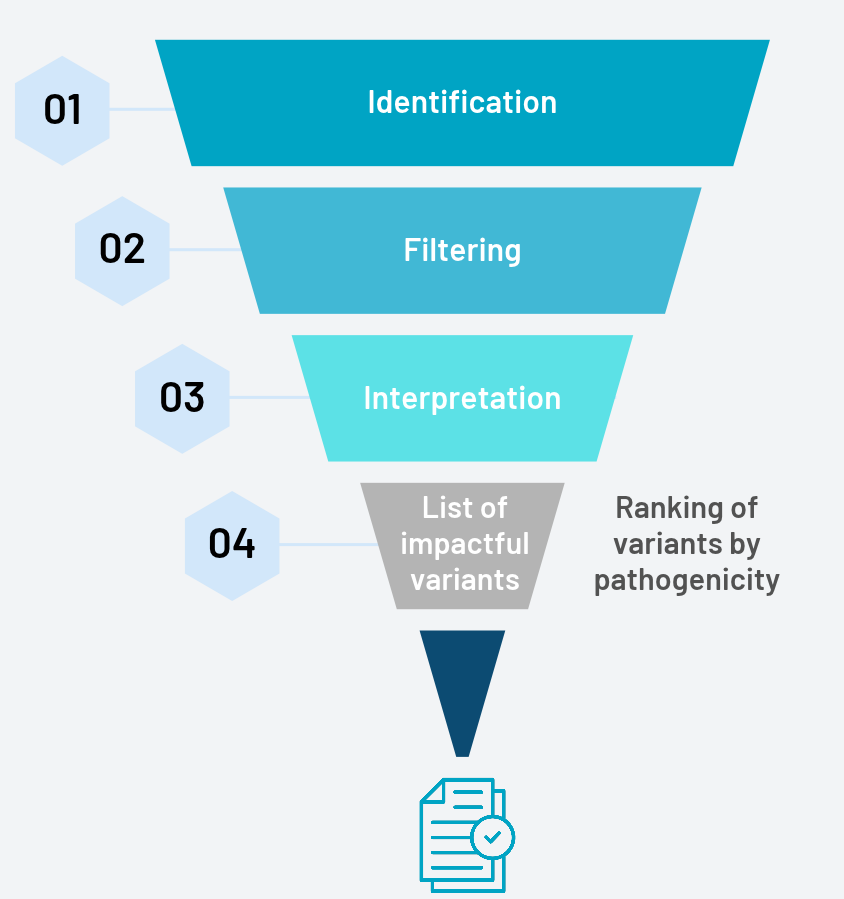
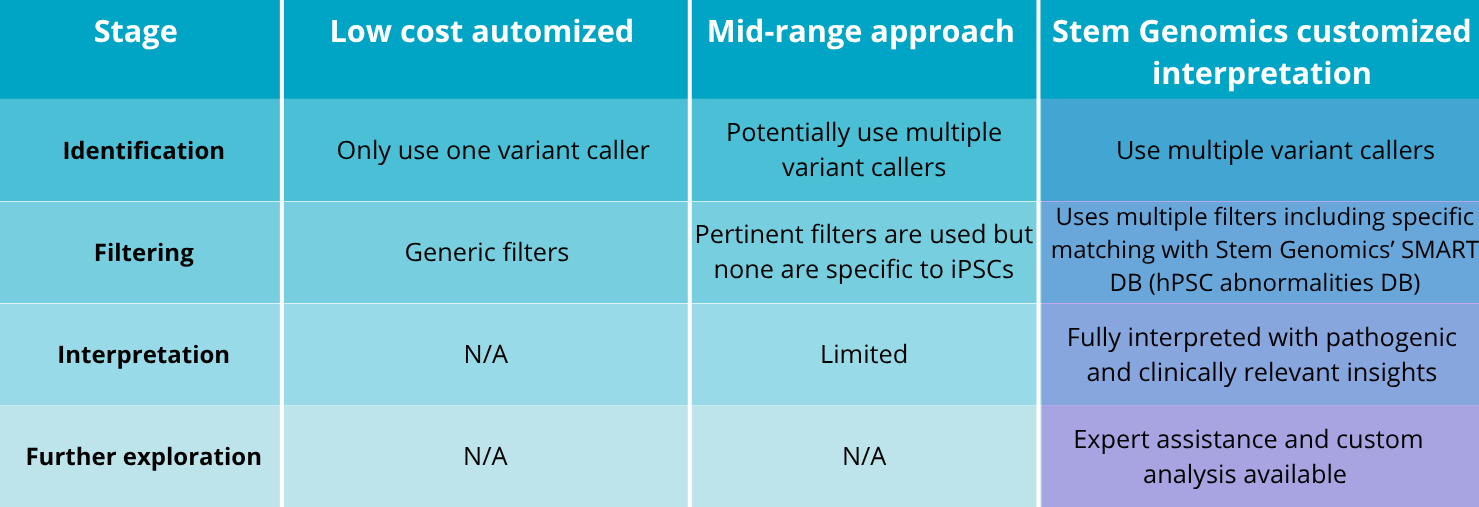
Vendors offer several levels of interpretation for NGS data. Unless you have an in-house bioinformatics team with an iPSC expertise, choosing a low-cost option risks yielding a large volume of confusing data with generic conclusions that bear no relevance to your specific culture type.
The Stem Genomics unique approach in the interpretation of WGS sequenced data:
The analysis gets delivered to your inbox within 4 weeks of the samples being received.
Meanwhile, you can remain focused on your research work.
All human cell types
Acquisition of a new line
Bank characterization
End of process
gDNA
Room temperature
4-5 weeks depending on report selection
Available from 1 sample
Stem Genomics handles the whole process for you from receipt of DNA samples to the delivery of the results. The library is built using Twist capture technology and the sequencing is performed on Illumina NovaSeq as paired-end reads. The final analysis will be sent to you within 4-5 weeks depending on the level of reporting you need or the type of analysis required (SNV only or SNV + CNV).
For the Whole Genome Sequencing assay, a PCR-free library is built using Illumina technology and the sequencing is performed on Illumina NovaSeq X Plus as paired-end reads. The final analysis will be sent to you within 4-5 weeks** depending on the level of reporting you need.
** lead times may vary depending on analysis requested and geographical region.
Follow the step-by-step guidance to perform your assay: view useful documents
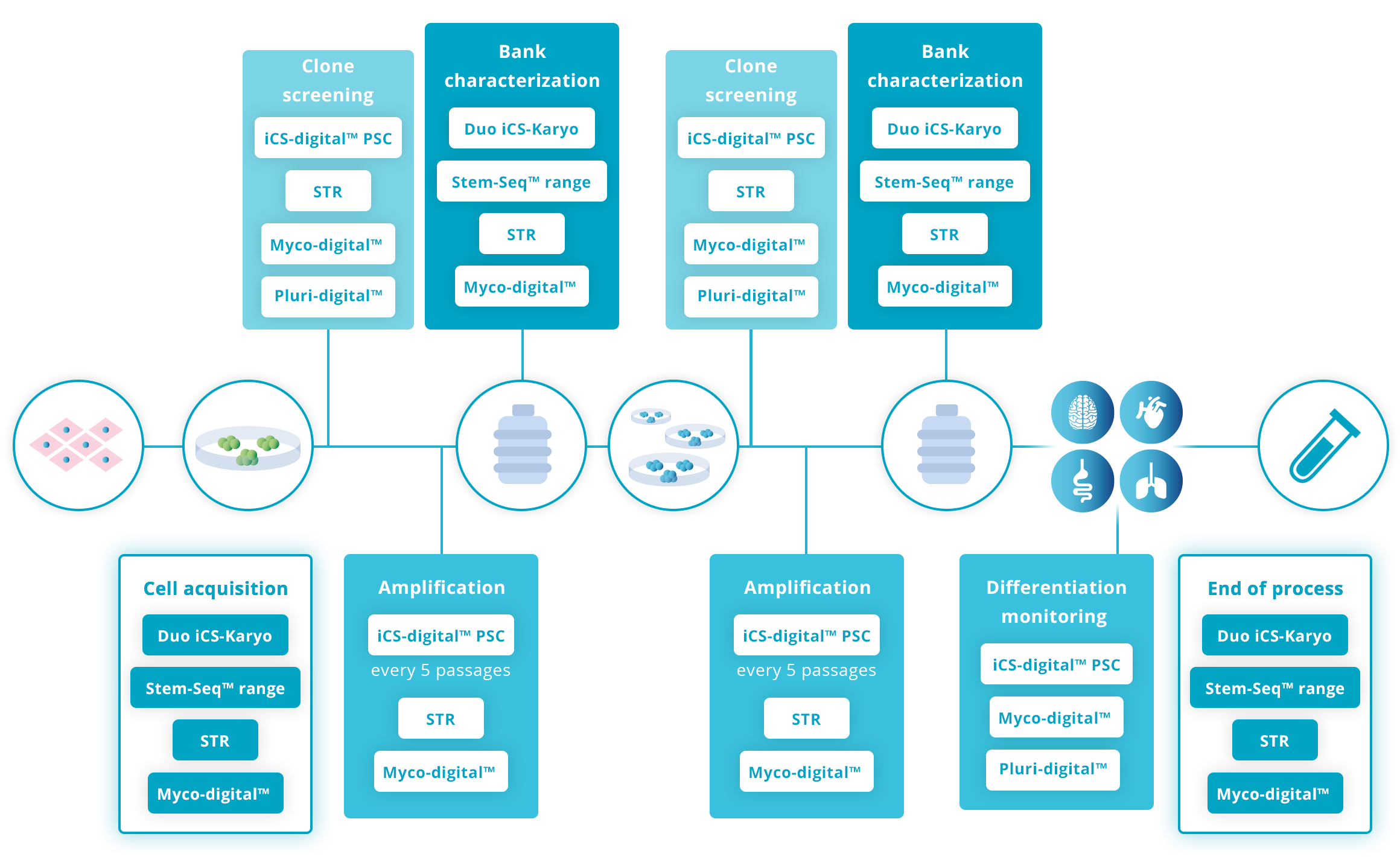
Recommended guidelines on genomic stability advise checking cells at various key steps in the workflow. Due to its exhaustivity and strong technical performance, the Stem-Seq™ range is best suited for the acquisition stage, when banking cells and/or at the end of the workflow. It strengthens the RUO process overall and supports the application for entering the clinical stage.
Click on the graphs below for more details
Check out our clients’ most frequently asked questions.
By continuing your browsing, you agree to the use of cookies for statistical and personalization purposes. The cookies collect information in a way that does not directly identify anyone. We respect your privacy, here's how
Comprehensive detection of SNVs, SVs/CNVs
Unparalleled interpretation by iPSC specialists
4-week turnaround
As of July 17, our new address will be:
400 Park Offices Drive, Room 105
Research Triangle Park, Durham, North Carolina 27713
Please note that we will be closed from July 12 to 16
during the transition.
Please enter your details below
Please enter your details below
Join us LIVE for a Q&A session on the latest iCS-digital™ PSC upgrade.
Find out what it means for you and ask all your questions
Juline VINCENT our R&D Project Manager and Digital PCR expert will answer you LIVE.
SAVE THE DATE: Thursday, November 7, 6pm CET/9am PDT/12 pm EDT.
Join us LIVE for our webinar!
Best Practices: Making your hPSC Quality Control workflow more efficient
Join Juline VINCENT, our R&D Project Manager, as she presents efficient quality control strategies specifically designed to address the unique characteristics of pluripotent stem cells.
Thursday, October 23, 12:00 PM EST / 6:00 PM CET
Please enter your e-mail address.